
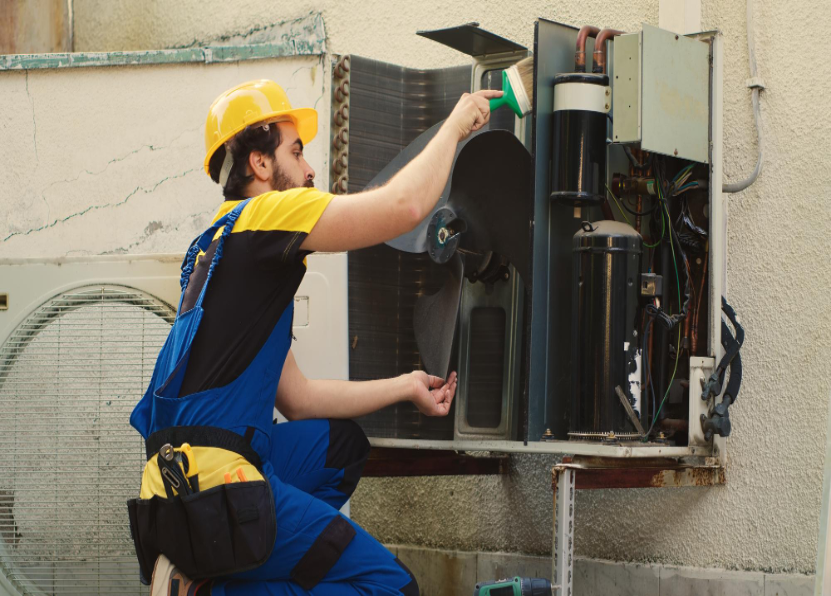
Deciding whether to repair or replace a major household appliance like an air conditioner often comes down to a balance of age, frequency of failure, and long-term value. As a general rule of thumb, if a unit is still well within its expected lifespan and the fix is a simple mechanical part, a repair is almost always the smarter financial move. Many homeowners use the “5,000 Rule”—multiplying the age of the unit by the cost of the repair—to determine if the investment is sound; if the result exceeds 5,000, the money is usually better spent on a new system.
However, cost isn’t the only factor to weigh. Older units often struggle with declining efficiency, leading to a steady creep in monthly utility bills that a simple repair won’t solve. If you find yourself calling for service multiple times a season, or if the unit uses outdated components that are increasingly expensive to source, you are likely just delaying the inevitable. While a total replacement requires a larger upfront investment, the transition to a modern, high-efficiency model often pays for itself over time through lower energy consumption and the peace of mind that comes with a fresh manufacturer’s warranty.
Related Posts
 Choosing the Right AC Repair Technician: What to Look For